Provenance matters when buying New Zealand clams because it tells you exactly where the clams came from, how they were harvested and who handled them before they reached your kitchen. For chefs and buyers, verified origin now sits alongside price in the buying decision, because it is what makes quality consistent and a supply easy to stand behind.
At Cloudy Bay Clams, we rarely think about our position in terms of price. When we looked at the wild shellfish category, the question we asked was not how to sell more clams, but what we have that is hard to replicate. The answer was provenance.
From Commodity To Verified Origin
Across food service globally, there has been a clear shift. Chefs and buyers are moving away from commodity product and toward ingredients with a verified origin and consistent quality. Buying is becoming less volume-driven and more relationship-driven.
Two changes sit behind that shift:
- Provenance is a procurement criterion: it is no longer only a menu talking point. Buyers want to know where a product comes from before they list it.
- Traceability is a baseline expectation: a clear record from the harvest to the kitchen is increasingly assumed, rather than treated as a premium feature.
What Our Provenance Actually Is
Provenance only counts if it can be checked. For Cloudy Bay Clams, it comes down to one origin and one unbroken chain of care, traceable from the moment a clam leaves the surf to the moment it arrives in a kitchen.
- One wild harvest: surf clams harvested wild from the surf zone of Cloudy Bay, Marlborough, New Zealand, since 1990.
- A selective method: our winnowing clam rake takes only market-ready mature clams, and undersized clams are returned to the seabed to replenish stocks.
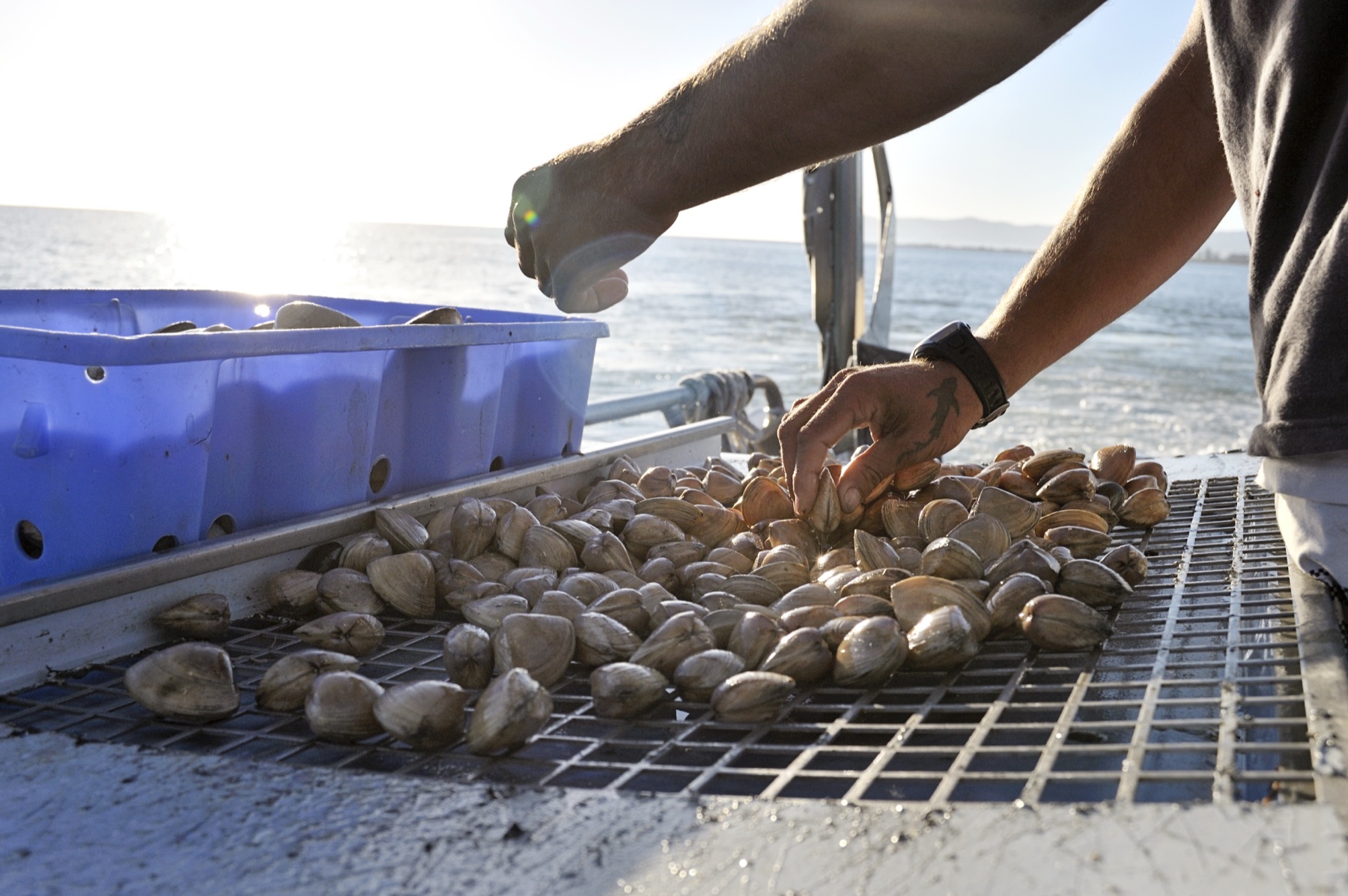
- Care on board: every catch is hand-sorted by species on deck, then held live in aerated seawater tanks on the journey back to shore.
- Depuration: every clam passes through our depuration facility in Blenheim, laid single-layer in tanks of oxygen-enhanced deep-ocean seawater.
- Tested and compliant: our clams are processed in our USFDA-approved facility, with regular testing of both the clams and the water they come from, and exported under full NZFSA compliance.
Three species come out of that one harvest: the Storm Shell (Spisula murchisoni), the Tua Tua (Paphies donacina) and the Diamond Shell (Crassula aequilatera).
Why Provenance Is Hard To Replicate
A distribution network can be copied. A wild harvest from one stretch of New Zealand surf, worked since 1990 and traceable at every step, is far harder to replicate. That is a provenance advantage rather than a distribution advantage, and it is why leading chefs have trusted our clams for years without a hard sell.
One origin, full traceability, full accountability. Sometimes the strongest position in a category is not the biggest one. It is the one that is hardest to replicate.
Read More, Or Talk To Us
The three species are set out on our Our Clams page, and the full story of how each clam is harvested, purified and tested sits on our Sustainability page. If you are looking for a supply with an origin you can verify, tell us what you need on the Enquire Now page, or take the “Or book a call” option there to book a time with us.
Originally shared on our LinkedIn page.
← Back to the blog